
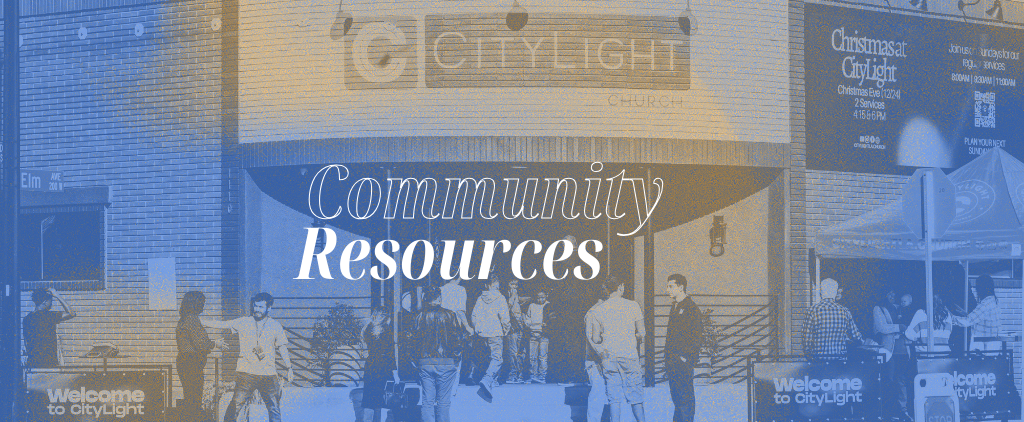
Find resources on the practice of community and committing to a local church
RESOURCES
FAQ’s
What do we mean by “community as a spiritual discipline”?
Community is not just friendship or social preference, it is a Spirit-formed practice where we intentionally place ourselves among God’s people so He can shape us through them. In Scripture, growth in Christ is rarely individualistic. From the early church in Acts of the Apostles to Paul’s vision of the church in Ephesians, believers mature together. Community is one of the primary ways God forms us into the likeness of Jesus.
Is community really necessary for spiritual growth?
Yes. While salvation is personal, formation is communal. We are described as a body (1 Corinthians 12), a family (Romans 12), and a temple being built together (1 Peter 2). You cannot be a detached body part and thrive. God uses encouragement, correction, confession, shared burdens, and shared joy to shape us.
Isn’t my relationship with God supposed to be personal?
It is deeply personal, but it was never meant to be private. Jesus forms a people, not just individuals. When He establishes the church in Matthew 16, He speaks corporately. Spiritual formation is meant to be done in loving community. Your walk with Christ flourishes when it is rooted among other believers who help you follow Him.
I love this. Framing community as a spiritual discipline is especially important in a city like Burbank/LA, where people are busy, career-driven, and relationally stretched thin. If you’re building this for CityLight LA’s resource page, here are FAQs that serve both theologically and practically.
What if I’ve been hurt by Christian community before?
That pain is real. Many of us carry wounds from church experiences. But isolation is not the cure for relational pain, vulnerable, loving relationships are. Community can wound, but it is also one of God’s primary tools for restoration. The gospel gives us categories for repentance, forgiveness, and reconciliation (see Colossians 3:12–14). In other words, community is a worthwhile risk. Start small. Move slowly. As it has been said, “The deepest healing comes when honest vulnerability is met with genuine love.”
I’m busy. How can I realistically practice community?
In a city like ours, community must be intentional.
Schedule it like you would anything important.
Start with a small group that meets consistently.
Practice shared rhythms (meals, prayer, serving).
Spiritual disciplines always require margin. Community is no different.
What makes Christian community different from just having friends?
Friendship is a gift; Christian community is a covenantal calling. Christian community centers on Christ, not just shared interests. It includes:
Mutual submission
Confession and accountability
Shared mission
Prayer and Scripture
In Hebrews 10:24–25, we’re told to “stir one another up toward love and good works.” That’s deeper than casual connection.
What if I don’t feel like I “fit”?
The church is not a collection of similar personalities, it’s a Spirit-formed body of diverse people, with different ethnic, family, political, economic and social backgrounds. Unity is rooted in Christ, not chemistry (see Ephesians 4:1–6). Growth often happens when we stay present with people who are different from us. Belonging often comes after commitment, not before.
How does community help me fight sin?
Sin thrives in secrecy. When we confess and pray for one another (James 5:16), darkness loses power. God uses trusted relationships to expose blind spots, encourage repentance, and remind us of grace. Without people to confess our sins too, we stunt out healing.
Can I grow spiritually just by attending Sunday services?
Corporate worship is vital—but it is not the fullness of biblical community. In Acts 2:42–47, believers gathered in both large settings and homes. Formation requires proximity, presence, conversation, and shared life, not just shared space.
What does practicing community look like at CityLight LA?
It looks like:
Joining a Life Group
Serving on a Serve Team
Sharing meals
Showing up for each other in times of need
Praying with others
Living on mission together
Community isn’t an add-on to spiritual life—it’s one of the primary contexts where Jesus forms us.
What if I’m more introverted?
Introversion is not a barrier to community.
Community isn’t about being loud; it’s about being present. You don’t have to know everyone—you just need a few people who know you.
How does community connect to mission?
We are formed together so we can be sent together.
Jesus sends His disciples in pairs (Luke 10). Our unity displays the gospel to the world (John 17). A fragmented church weakens witness; a loving community makes the gospel visible.
If you'd like, I can:
Refine this into a tighter web-ready version (shorter answers, more scannable).
Write a short theological intro paragraph to place above the FAQs.
Add discussion prompts for small groups.
Or shape it around your 5-part framework (accurate, authentic, articulate, accessible, applicable) so it matches your teaching voice at CityLight.